Most people think of plastic or paper when they think about recycling, but did you know that metal recycling is just as crucial?
Scrap metal recycling reduces air pollution, conserves natural resources, and keeps billions of pounds of reusable material out of landfills every year.
In this guide, you’ll discover exactly how metal recycling works, which metals are worth the most, what myths you should stop believing, and how to choose the right recycling center.
Let’s dive into the ultimate guide to metal recycling so you can recycle smarter and earn more from your scrap.
Key Takeaways:
- Metal recycling is one of the most impactful ways to reduce pollution, save energy, and conserve natural resources, far more than most people realize.
- Knowing the differences between metal types (ferrous vs. non-ferrous) helps you sort smarter and earn higher payouts for your scrap.
- Recycling myths can cost you money; understanding what’s true improves safety, pricing, and efficiency.
- Choosing the right recycling center ensures accurate grading, fair pricing, and a smoother, more profitable experience.
Facts About Metal Recycling
Metal recycling is full of surprising truths that showcase how powerful and efficient the process really is. Before diving into the details, here are the most important facts that show why scrap metal recycling fuels sustainability and the global economy.
1. Steel Is the Most Recycled Material in North America
Steel leads the recycling world because it’s everywhere: construction, cars, appliances, and manufacturing.
The best part? Steel can be recycled forever without losing strength.
2. Recycling Aluminum Uses Less Energy
Aluminum is a sustainability superstar. Recycling uses up to 95% less energy compared to creating new aluminum from raw ore.
3. Metal Recycling Is Fast
Unlike paper or plastic, metals can be melted down and reused in a matter of weeks. That means your old soda can might return to the shelf in just 60 days.
4. The United States Recycles Millions of Tons of Metal
Every year, the U.S. processes over a million metric tons of scrap metal. This fuels industries, lowers production costs, and reduces the need for mining.
5. Metal Recycling Reduces Air Pollution
Recycling metal generates far fewer emissions than producing new metal from virgin materials. That means cleaner air, less smog, and healthier communities.
6. Aluminum and Tin Cans Can Last Decades in Landfills
If tossed, aluminum cans take centuries to break down. Recycling them ensures they never end up clogging landfills for generations.
Myths About Metal Recycling
There’s a lot of misinformation out there about metal recycling, and it stops people from recycling correctly. Let’s clear the air with the most common myths so you can avoid costly mistakes and recycle with confidence.

Myth 1: You Can’t Recycle Crumpled Metal
Wrong. Metals are valued for their composition, not their shape.
Myth 2: Separating Metal From Trash Isn’t Important
Mixing metals with trash makes sorting harder and increases contamination. Separating metal ensures higher payouts and faster processing.
Myth 3: Recycling Isn’t Economical
Scrap metal recycling is a multi-billion-dollar industry. Businesses, consumers, and manufacturers all benefit financially.
Myth 4: Bigger Scrap Pieces Are Better
Bigger isn’t always better. Clean, properly sorted scrap often pays more than oversized mixed loads.
Myth 5: Recycling Uses More Energy Than Making New Metal
This one isn’t even close. Recycling saves massive amounts of energy, especially for aluminum, copper, and steel.
Myth 6: You Can Burn Copper Wire to Strip It
Burning copper wire is illegal and hazardous. It releases toxic fumes and reduces the copper’s value.
Myth 7: Recycling Scrap Metal Is Dangerous
With proper tools and training, scrap metal recycling is extremely safe. Professional yards follow strict safety standards.
Myth 8: There Is No Demand for Scrap Metal
Finally, demand for scrap metal is skyrocketing thanks to construction, manufacturing, and green energy industries. Recycled metals help fuel the U.S. economy and global supply chains.
Scrap Metal Classifications
Sorting metals into proper categories is essential for maximizing value in scrap metal recycling. Different metals behave differently, have varying demand, and pay differently, so understanding the classifications is key.
Ferrous vs. Non-Ferrous Metals
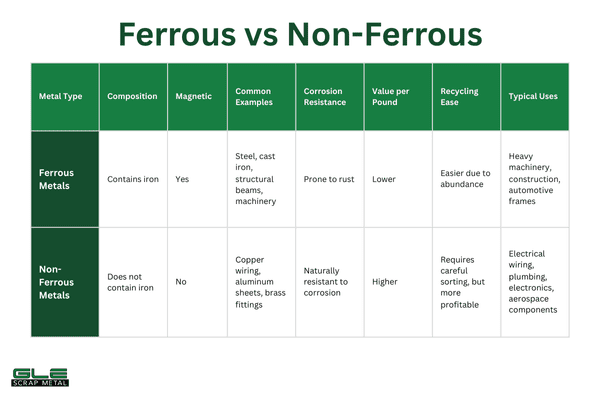
One of the most critical distinctions in metal recycling is ferrous vs. non-ferrous metals. Knowing the difference helps recyclers, manufacturers, and individuals maximize payouts and streamline processing.
Ferrous Metals
Ferrous metals are abundant, easy to collect, and highly reusable. They are commonly found in:
- Construction debris
- Household appliances
- Vehicles
- Industrial equipment
Because ferrous metals are magnetic, they’re simple to separate from mixed scrap, making them a staple of the recycling industry.
Iron
Recycled iron is used in pipes, tools, and building materials. It melts efficiently and processes quickly, making it a versatile material in construction and manufacturing.
Steel
Recycled steel is one of the most important materials in modern manufacturing. It maintains its strength and durability no matter how many times it’s recycled, making it essential for:
- Automotive components
- Construction frameworks
- Appliances
- Industrial machinery
Non-Ferrous Metals
Non-ferrous metals don’t contain iron, which means they don’t rust, are lighter, and are often more valuable. They’re also widely used in high-performance and electrical applications.
One major category within non-ferrous metals is red metals, which include copper, brass, and bronze. These metals are prized for their conductivity, corrosion resistance, and industrial utility.
Copper
Copper is one of the highest-value scrap metals. It’s found in:
- Electrical wiring
- Plumbing pipes
- Electronics
- Motors
Copper pricing fluctuates daily based on commodity markets, but clean, unalloyed copper consistently earns the highest payouts.
It’s graded by purity: #1, #2, insulated, and bare bright. Insulated copper wire prices vary depending on copper percentage and thickness.
Brass
Brass is commonly used in:
- Plumbing fixtures and valves
- Musical instruments
- Decorative items
- Shell casings
Heavier and more valuable than many other metals, brass is fully recyclable and retains its value through multiple cycles.
Bronze
Bronze is another red metal, celebrated for its strength and corrosion resistance. It’s typically found in:
- Bearings
- Sculptures
- Industrial components
Recycling bronze preserves natural resources while supplying high-demand materials for manufacturing.
Aluminum
Aluminum is lightweight, abundant, and infinitely recyclable. It’s used in:
- Cans
- Car wheels
- Windows and doors
- Building materials
Recycling aluminum saves energy, reduces emissions, and lowers production costs, making it one of the most in-demand metals for manufacturers.
Stainless Steel
Stainless steel contains chromium for corrosion resistance and is widely used in:
- Appliances
- Medical equipment
- Commercial kitchens
Recycling stainless steel helps reduce environmental impact and supports industries that rely on durable, high-quality materials.
Read our full blog on the Best Scrap Metal to Recycle and where to find it.
History of Metal Recycling
Metal recycling goes back thousands of years.
Ancient World
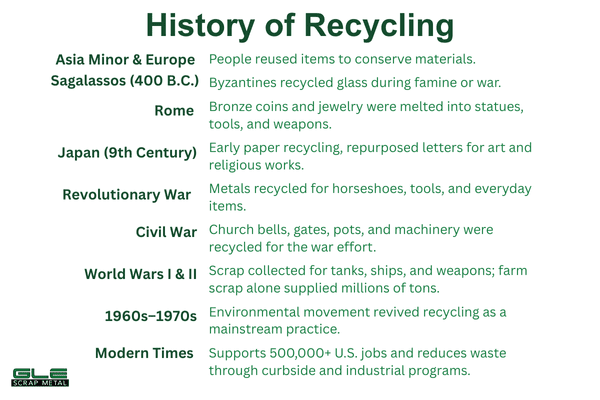
Recycling was essential in ancient societies, where resources were scarce.
- Asia Minor & Europe: People reused items extensively to conserve materials.
- Sagalassos (400 B.C.): Byzantines recycled glass, especially during famine or war, to repurpose existing items.
- Rome: Romans melted bronze coins and jewelry into statues, weapons, and tools, particularly during wartime, valuing large bronze objects over individual coins.
- Japan (9th Century): Early paper recycling emerged alongside papermaking. Recycled paper was prized for art, poetry, and religious works, with notable practices such as repurposing letters into sutras.
United States
The U.S has a history of recycling metal, especially during wartime when nations collected scrap metal for tanks, ships, and aircraft.
- Revolutionary War: Metals were recycled for horseshoes, tools, and everyday items. Paul Revere, a skilled silversmith, helped repurpose metals and later established the first rolling copper mill in the U.S.
- Civil War: Metal scarcity led civilians and soldiers to recycle church bells, gates, pots, pans, machinery, and ammunition. Recycling became essential to support the war effort.
- World War I & II: Nationwide campaigns encouraged scrap metal collection for tanks, ships, weapons, and aircraft. Families, farmers, and cities contributed pots, machinery, statues, and old cannons. By World War II, 1.5 million tons of farm scrap alone could supply massive military production.
- 1960s–1970s: Environmental Movement: Post-war consumerism caused a decline in recycling, but the rise of environmental awareness, especially around Earth Day 1970, revived recycling as a mainstream practice.
- Modern Times: Today, metal recycling is a major industry supporting over 500,000 U.S. jobs. Curbside recycling programs, standardization, and environmental initiatives help conserve resources, reduce landfill waste, and stabilize metal product prices.
While the technology used to recycle metal has evolved, the mission remains the same: to reuse valuable resources.
How Metal Is Recycled
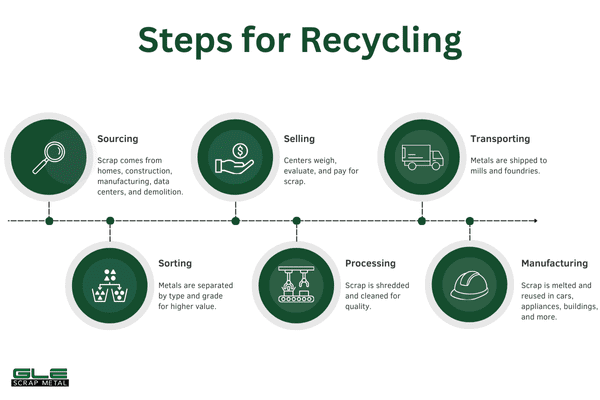
The metal recycling process is fast, efficient, and incredibly effective. Here’s a step-by-step look at how scrap turns into reusable material within weeks.
1. Sourcing
Scrap metal comes from countless places.
- Homes contribute old appliances, tools, and electronics.
- Construction sites supply beams, pipes, siding, and leftover materials.
- Manufacturing plants send offcuts, punch-outs, and defective parts.
- Data centers hold a lot of metal, from casings to copper wire
- Demolition projects add structural steel, copper wiring, and heavy machinery.
- Even everyday consumer items, cans, metal furniture, grills, and plumbing fixtures, play a role.
If it’s made of metal, it can be recycled. Sourcing is the first critical step in keeping reusable metal out of landfills and returning it to the supply chain.
Using the right tools and following the proper safety procedures helps to efficiently sort materials, maximize value, and maintain high accuracy for customers.
2. Sorting
Sorting is where the real value is created. Metals are separated by material type, like steel, copper, brass, aluminum, and stainless steel, and then sorted again by grade and quality.
Clean, properly sorted scrap is worth significantly more because it requires less processing downstream. Sorting can be done manually, mechanically, or through advanced automated systems.
3. Selling
Once the metal is collected and sorted, customers bring it to a recycling center or schedule a pickup. The center weighs, tests, and evaluates each type of metal to ensure accurate pricing.
After inspection, the seller receives payment, and the scrap enters the facility’s processing stream. This step makes recycling accessible and profitable for businesses and households alike.
4. Processing
After sorting, metals go through several preparation stages. Large materials are shredded, cut, or baled to reduce volume. This makes transport easier and improves furnace efficiency during melting.
Next, the scrap is cleaned of contaminants, such as coatings, plastics, or insulation, to ensure high-quality metal output. Once prepared, the metal is ready for the next phase in the recycling cycle.
5. Transporting
Processed scrap is loaded onto trucks, railcars, or shipping containers and delivered to mills or foundries. These facilities specialize in reclaiming metals at scale and turning raw scrap into usable industrial materials.
Efficient transportation keeps prices stable and ensures manufacturers receive a steady supply of recycled metal.
6. Manufacturing
At the mill or foundry, scrap metal is melted in massive furnaces, purified, and cast into new forms, like sheets, bars, coils, ingots, or billets. These newly refined metals are then sold to manufacturers.
From there, recycled steel, copper, and aluminum become cars, appliances, building materials, electronics, packaging, tools, and more. The entire cycle, from sourcing to new product, can take only a few weeks, proving just how powerful and efficient scrap metal recycling really is.
Benefits of Metal Recycling
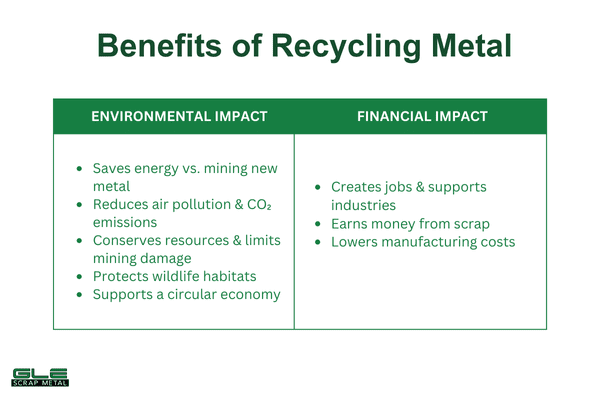
The impact of metal recycling goes far beyond earning money. Here are the environmental and economic benefits that make scrap metal recycling essential.
Environmental Benefits
Metal recycling slashes pollution and conserves natural resources. And since metals are infinitely recyclable, each cycle adds enormous environmental value.
Energy Savings
Manufacturing products from recycled metal uses far less energy than producing metal from raw ore. This means lower emissions, reduced fuel consumption, and a smaller carbon footprint.
Compared to mining and refining new metals, recycling offers a far more efficient and sustainable solution.
Air Pollution Reduction
Less mining and smelting means fewer pollutants released into the atmosphere. Recycling metal directly improves air quality, reduces harmful dust, and decreases greenhouse gas emissions, contributing to healthier communities and a cleaner planet.
Ore Conservation
Recycling metals reduces the need to extract raw ore from the earth. Mining often devastates landscapes, disrupts waterways, and damages ecosystems. As a result, we preserve natural resources and protect fragile environments from destructive practices by reusing materials.
Wildlife Protection
Mining operations can destroy habitats and threaten biodiversity. Recycling metal helps maintain ecosystems and allows wildlife to thrive undisturbed, keeping forests, rivers, and grasslands intact.
Greenhouse Gas Reduction
Scrap metal recycling significantly lowers CO₂ emissions compared to extracting and processing new metals. Every ton of recycled metal contributes directly to global climate goals, reducing humanity’s overall carbon footprint.
Sustainability
Metals are infinitely recyclable. Each time they are repurposed, waste is minimized, natural resources are preserved, and products are kept in circulation, supporting a circular economy for generations to come.
Financial Benefits
Recycling metals isn’t just good for the environment; it’s good financially.
For the Economy
The scrap metal industry fuels sectors like manufacturing, construction, and transportation. It creates jobs, supports thousands of businesses, and keeps metals circulating instead of sitting idle in landfills.
For Individuals
Recycling scrap metal keeps money in your pocket. Clean, sorted metals earn the highest payouts, turning unwanted items into tangible financial benefits.
For Consumers
When manufacturers use recycled metals, production costs drop. These savings often translate to lower prices on goods, making everyday products more affordable while reducing the environmental impact of manufacturing.
Industries That Produce Scrap Metal
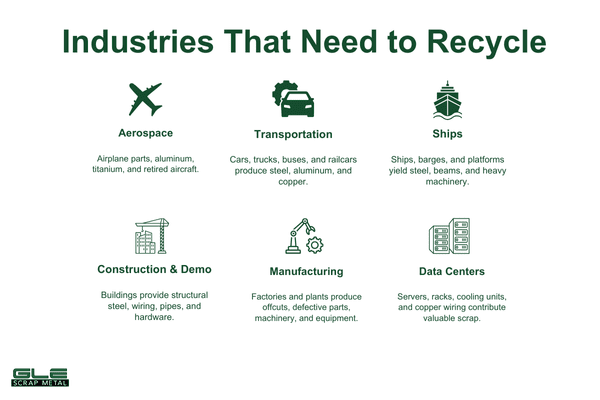
Recycling begins with understanding where large volumes of scrap metal come from. Many major industries generate consistent, high-quality scrap that can be efficiently recycled and returned to the supply chain.
Aerospace
Airplane parts, aluminum panels, titanium components, and retired aircraft contribute valuable non-ferrous metals used in high-performance applications.
Transportation
From cars and trucks to buses and railcars, the transportation sector produces massive amounts of steel, aluminum, and copper during repairs, upgrades, and end-of-life processing.
Shipbuilding & Marine
Ships, barges, and offshore platforms contain hulls, beams, stainless steel, and heavy machinery that eventually become large sources of recyclable metal.
Demolition & Construction
Tearing down or renovating buildings yields structural steel, copper wiring, plumbing pipes, rebar, and hardware, some of the most common forms of scrap in the recycling industry.
Manufacturing
Factories produce offcuts, punch-outs, defective parts, and leftover materials from machinery, appliances, electronics, and equipment.
Industrial Facilities
Refineries, plants, warehouses, and processing facilities generate substantial amounts of scrap metal through machinery upgrades, broken equipment, piping, tanks, and metal infrastructure.
Data Centers
As servers, cooling units, and infrastructure are upgraded, data centers generate electronics casings, server racks, insulated copper wiring, and aluminum components.
By channeling scrap from these industries back into production, recycled metals create a closed-loop system that benefits both businesses and the environment.
What Recycled Metal Is Used For
Recycled metal supports nearly every major industry, providing strength, durability, and sustainability. Here’s a breakdown of where recycled metals are used.
Construction
Recycled steel and iron are used in beams, pipes, rebar, bridges, roofing, and building frameworks. These materials provide structural integrity while helping builders lower costs and meet sustainability standards.
Industrial
Factories depend on recycled metals for machinery parts, tools, and production equipment. Using recycled metals reduces material costs and supports more efficient, eco-friendly manufacturing processes.
Transportation & Automotive
Cars, trucks, buses, trains, and shipping containers include large amounts of recycled steel, aluminum, and copper. These metals improve durability, reduce manufacturing costs, and support the push toward greener transportation.
Ships & Marine
Recycled steel is ideal for ship hulls, platforms, engine parts, and marine infrastructure, thanks to its corrosion resistance and strength under extreme conditions.
Aerospace
High-performance recycled metals like aluminum, titanium, and nickel alloys are essential in aircraft bodies, turbine components, satellites, and spacecraft. Recycled materials help reduce weight while maintaining strict engineering standards.
Manufacturing
Appliances, electronics, and industrial machinery depend on recycled metals for parts that require reliability and consistent quality during mass production.
Home Furnishings
Recycled metals are used in furniture, lighting fixtures, shelving, and décor, offering both durability and an eco-friendly appeal for consumers.
Food Packaging
Aluminum cans, tin containers, and metal packaging are made largely from recycled materials. This reduces energy use, lowers production costs, and keeps billions of containers out of landfills.
By using recycled metals, businesses can save the planet and enhance their reputation!
How to Choose the Right Metal Recycling Center
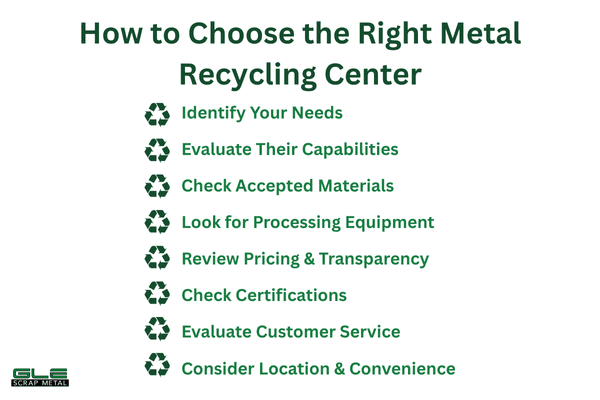
Finding the right metal recycling center can make or break your experience. Here’s what to evaluate so you get the best pricing, service, and overall value.
1. Identify Your Needs
First, start by understanding exactly what materials you want to recycle. Some centers specialize in ferrous metals like steel and iron, while others focus on non-ferrous metals such as copper, aluminum, and brass.
Knowing your metals and approximate volumes ensures you choose a yard equipped to handle them efficiently.
2. Evaluate Their Capabilities
A professional recycling yard should have advanced processing equipment, heavy machinery, and expert graders on staff. These capabilities guarantee accurate sorting, faster turnaround, and fair pricing.
Further, a yard without proper tools may undervalue your scrap or take longer to process it.
3. Check Accepted Materials
Not every recycling center accepts all metals or materials. Confirm that your items, whether household appliances, construction scrap, wires, or industrial metals, are accepted.
Some centers also limit the size or quantity of scrap they can process, so check this before your visit.
4. Look for Processing Equipment
Modern yards use equipment like shredders, shears, balers, and powerful magnets to maximize efficiency. As a result, metals are sorted accurately, reducing contamination and improving the final payout.
Centers with outdated tools may take longer and provide lower-quality processing.
5. Review Pricing & Transparency
Fair pricing is key, so look for centers that post market-based rates, clearly explain grade differences, and offer hedging programs.
Transparency builds trust and ensures you get a payout that reflects current metal market conditions. Avoid facilities that are vague or inconsistent with pricing.
6. Check Certifications
Certifications demonstrate that a recycling center meets environmental, safety, and industry standards. These credentials protect both the customer and the community by ensuring scrap is handled responsibly and legally.
Certified yards are often more reliable and professional.
7. Evaluate Customer Service
A reputable metal recycling center should feel organized, professional, and approachable. Friendly staff, clear instructions, and a clean facility are all signs of a yard that values your business.
Additionally, good customer service makes the recycling process easier and more efficient.
8. Consider Location & Convenience
Proximity matters. Choosing a local yard saves on transport costs, reduces turnaround time, and often results in a higher overall payout.
Convenient access also makes it easier to recycle consistently, keeping metals out of landfills while supporting local businesses.
Recycle Your Scrap Metal Today
Recycling metal is one of the fastest ways to make a positive impact, environmentally and financially. Whether you’re a homeowner cleaning out your garage or a business handling industrial scrap, recycling metal helps you save money, reduce waste, and support a sustainable future.
Now you have a complete, powerful understanding of metal recycling, from facts and myths to classifications, benefits, and how to choose the right recycling center.
Ready to take what you’ve learned and put it into action?
If you want top-tier service, transparent pricing, fast processing, and a trusted partner for all your scrap metal recycling needs, GLE Scrap is here to help. Turn your scrap into real value, recycle smarter, and make an impact today.