Choosing a metal recycling center is easy when all you need is somewhere to unload scrap. Choosing the right recycling partner for a business is a different decision.
For manufacturers, demolition contractors, construction companies, HVAC contractors, electricians, and industrial operations, scrap metal can affect storage space, jobsite efficiency, transportation costs, and the value recovered from leftover material.
A good scrap metal recycler should make that process easier, not create another operational headache.
If your company is comparing options for scrap metal recycling in Tampa, use this checklist to evaluate recyclers based on the factors that matter most to a commercial operation.
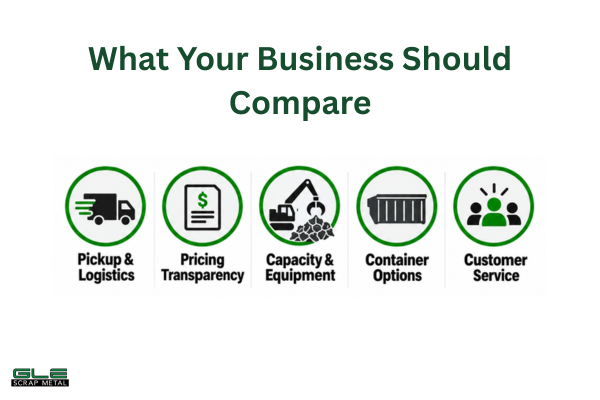
The quick answer? When choosing a metal recycling center, businesses should evaluate:
- Reputation and experience
- Metals accepted
- Pricing and weighing practices
- Commercial pickup and transportation options
- Ability to handle your volume
- Documentation and account support
- Scheduling and responsiveness
- Experience serving your industry
The closest scrap yard in Tampa is not automatically the best fit. For commercial accounts, dependable service and the ability to support your operation can be just as important as location.
1. Look for a Metal Recycling Center With a Strong Reputation
Start with the basics: who are you trusting with your company’s material? A recycling company that has worked with commercial and industrial customers over time is more likely to understand that businesses have different expectations than one-time scrap sellers.
Check Their Experience
Ask how long the recycler has been operating and what types of customers they regularly serve.
A recycler accustomed to working with manufacturers, contractors, demolition companies, and industrial facilities is more likely to understand issues such as:
- Recurring scrap generation
- High-volume loads
- Scheduled pickups
- Container needs
- Multiple metal grades
- Project timelines
- Production schedules
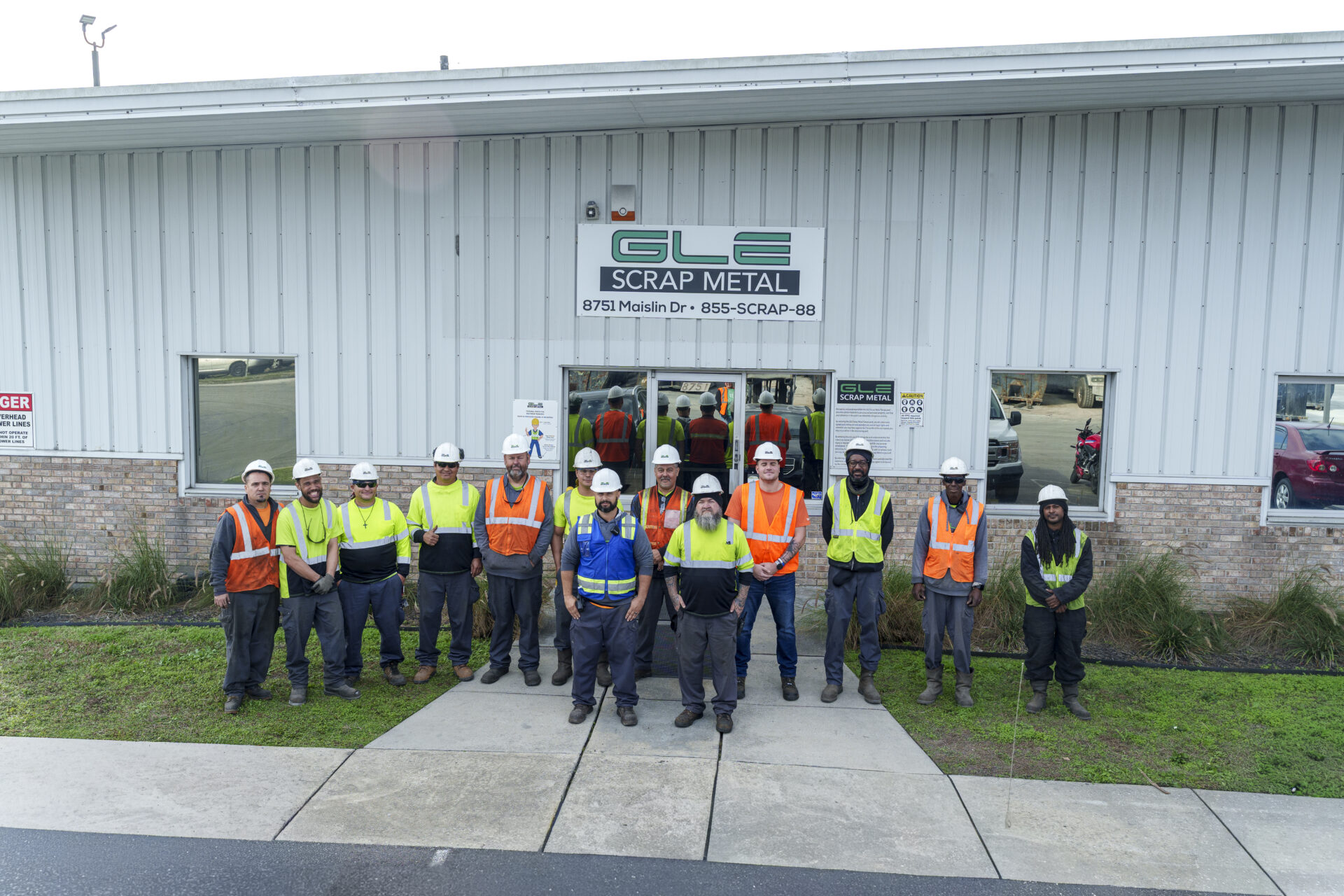
GLE Scrap Metal, for example, serves commercial and industrial accounts and operates recycling facilities in multiple markets across Florida and the United States.
Read Reviews With a Business Lens
Online reviews can be helpful, but don’t only look at the star rating.
Pay attention to comments about:
- Communication
- Payment
- Staff responsiveness
- Pickup reliability
- Weighing
- Turnaround time
- Problem resolution
For a commercial account, consistency often matters more than whether someone had a fast one-time drop-off.
2. Confirm What Types of Scrap Metal the Recycler Accepts
Before scheduling a pickup or moving material, confirm that the recycling center handles the types of metal your business generates.
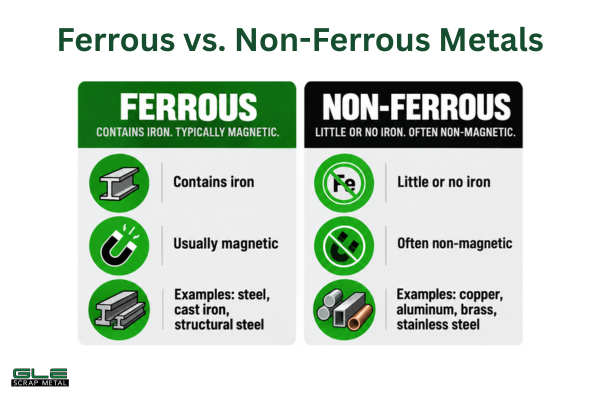
One of the first distinctions to understand is ferrous vs. non-ferrous metal.
Ferrous Metals
Ferrous metals generally contain iron and are typically magnetic.
Examples can include:
- Steel
- Cast iron
- Structural steel
- Certain machinery components
- Steel beams and demolition material
Non-Ferrous Metals
Non-ferrous metals do not contain significant amounts of iron and are generally non-magnetic.
Common examples include:
- Copper
- Aluminum
- Brass
- Stainless steel
- Insulated copper wire
- Radiators
- Aluminum-copper coils
GLE buys and processes multiple grades of non-ferrous scrap, including copper, aluminum, brass, stainless steel, wire, radiators, electric motors, and other materials.
Ask Before Sending an Unusual or Mixed Load
Do not assume every scrap metal recycling center accepts every material. Before arranging transportation, send the recycler a list or photos of what you have and ask whether the material is accepted.
For larger projects, this can prevent unnecessary hauling and help your team plan how material should be separated before pickup. Before you schedule a pickup, tell the recycler what material you have, approximately how much you have, whether it is already separated, and how often your business generates it.
3. Understand How Scrap Metal Pricing Works
For businesses generating significant scrap volumes, a small difference in price per pound can add up quickly. That does not mean the recycler advertising the highest number is automatically offering the best overall value.
You need to understand how your material is being evaluated.
Ask How Your Scrap Is Graded
Different metal grades can carry different values.
Ask:
- How will the material be classified?
- Will mixed metals be separated into different grades?
- Will you receive a breakdown of the load?
- What scale is used?
- Can your team see the recorded weights?
GLE Scrap Metal uses state-certified scales and has weight/load breakdowns available for all incoming customer materials.
Understand What Influences Scrap Metal Prices
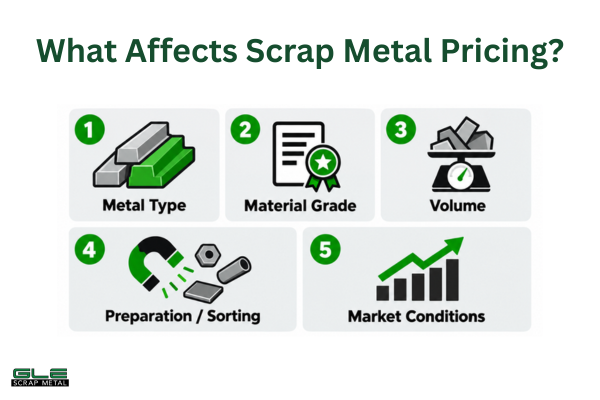
Scrap values can move with commodity markets, supply and demand, metal type, material condition, volume, and other factors. Your team can also influence the value of a load.
Separating metals, identifying higher-value material, reducing unnecessary attachments, and understanding exactly what is being sold can make the transaction easier to evaluate.
We recently published a detailed breakdown of the factors that affect scrap metal prices in Tampa, including metal grade, preparation, volume, and broader market conditions.
Ask About Payment Terms
Commercial accounts should also know when and how payment is handled.
Questions may include:
- When is the final weight confirmed?
- When is pricing finalized?
- What documentation comes with payment?
- Who should accounting contact if there is a discrepancy?
Clear expectations can prevent a simple scrap transaction from becoming an administrative problem.
4. Evaluate Scrap Metal Pickup and Logistics
For many businesses, the best metal recycling solution in Tampa is not necessarily the recycler closest to the facility. It may be the recycler that makes transportation easier.
Think about the actual cost of moving scrap. If employees have to stop working, load a company truck, drive across Tampa, wait to unload, and return to the facility, the trip has a labor and operational cost even before fuel is considered.
Ask Whether Commercial Pickup Is Available
A recycler with its own logistics capabilities can be valuable for businesses generating recurring or large-volume scrap.
GLE Scrap Metal operates a commercial fleet and offers scheduled scrap metal pickup for qualifying businesses, including manufacturing plants, demolition sites, and commercial accounts.
Ask About Containers
If your operation generates scrap continuously, storing it efficiently matters.
Depending on the recycler and your volume, options may include:
- Bins
- Drums
- Gaylords
- Roll-off containers
- Other commercial collection containers
Container and bin options are available for qualifying commercial accounts, and its non-ferrous service lists container sizes ranging from 10 to 80 yards.
Make Sure Pickup Fits Your Operation
A pickup should work around your schedule rather than disrupt it.
Ask:
- How far in advance should pickups be scheduled?
- Are recurring pickup schedules available?
- How are urgent or unusually large loads handled?
- Who coordinates dispatch?
- What information does the recycler need before sending a truck?
For businesses producing scrap week after week, these questions can matter as much as price.
5. Make Sure the Recycler Can Handle Your Volume
A recycler may be a good fit for a small contractor but not necessarily for a manufacturer producing recurring truckloads of material.
Before establishing a relationship, explain your normal volume.
You may also want to describe seasonal peaks, major demolition projects, plant cleanouts, or other situations where the amount of scrap can increase quickly.
Questions to Ask About Capacity
Ask the recycler:
- Do you regularly handle commercial or industrial quantities?
- Can you support recurring pickups?
- What happens if our scrap volume suddenly increases?
- Do you have equipment appropriate for our material?
- Can you provide multiple containers if needed?
- Can you coordinate multiple loads for a large project?
Our commercial fleet supports volumes ranging from individual truckloads to multi-load industrial accounts. That type of capacity can be especially important for demolition, manufacturing, construction, and other operations where material can accumulate quickly.
6. Look for Experience With Businesses Like Yours
Not every industry generates scrap in the same way.
- A demolition contractor may need containers coordinated around project phases.
- A manufacturer may generate the same metal every week and need a recurring pickup schedule.
- An HVAC contractor may accumulate copper, aluminum-copper coils, wire, and equipment components across multiple projects.
- An industrial facility may need a more structured collection process simply because of the volume involved.
Look for a commercial scrap metal recycling company that understands how your industry operates.
GLE’s Tampa facility specifically serves local industrial manufacturing, demolition, building, and dealer customers. The location operates as a commercial-focused facility rather than a public walk-in yard.
7. Ask What Documentation You’ll Receive
Scrap recycling creates records your operations and accounting teams may need later. Ask what documentation comes with each transaction.
Depending on the recycler and service arrangement, that may include:
- Weight tickets
- Load breakdowns
- Transaction records
- Pickup records
- Account reporting
The goal is simple: your team should be able to understand what material left the facility, what it weighed, and how the transaction was calculated.
This becomes increasingly important when scrap recycling is a recurring part of the business rather than an occasional cleanout.
8. Consider Customer Service Before You Need It
Customer service seems unimportant when everything goes right. You notice it when a truck needs to be rescheduled, a load is larger than expected, someone has a question about a weight ticket, or your production team suddenly needs material removed.
Before selecting a recycler, find out:
- Will your business have a regular contact?
- How quickly are calls returned?
- Who handles scheduling questions?
- Who handles payment or weight questions?
- How are service problems resolved?
For businesses producing scrap continuously, a dependable point of contact can save significant time.
The Closest Scrap Yard in Tampa Isn’t Always the Best Choice
Distance matters because transportation costs money, but it should be only one part of the decision. A recycler slightly farther away may be a better business partner if it provides commercial pickup, better scheduling, suitable containers, stronger account support, or more appropriate processing capabilities.
GLE’s Tampa operation is built around commercial and industrial accounts and scheduled service. The facility is closed to the general public. Businesses should contact GLE to discuss their material and arrange service.
The Business’s Metal Recycling Center Checklist
Before choosing a metal recycling center in Tampa, ask:
- What ferrous and non-ferrous metals do you accept?
- Should I confirm any unusual material before scheduling service?
- Do you regularly work with businesses in my industry?
- Can you handle our typical scrap volume?
- Can you accommodate increases in volume during larger projects?
- How is our scrap graded?
- How is the material weighed?
- Will we receive a weight or load breakdown?
- How is pricing determined?
- What are your payment terms?
- Do you offer commercial scrap metal pickup?
- Are recurring pickups available?
- What containers or bins can you provide?
- How far in advance should pickups be scheduled?
- What documentation will we receive?
- Who will be our point of contact?
- How are questions about loads, weights, or payments handled?
The right answers will look different for every company. What matters is whether the recycler’s process fits the way your business actually operates.
Choose a Tampa Metal Recycling Partner Built for Business
Choosing a metal recycling center is ultimately about more than finding somewhere to send scrap. The right partner can help your team keep material moving, simplify pickups, understand what your scrap is worth, and create a more consistent process for handling metal generated by your operation.
GLE Scrap Metal’s Tampa facility serves commercial businesses including manufacturers, demolition companies, contractors, builders, and other organizations generating scrap metal. The Tampa facility is closed to the general public, so businesses should contact GLE to discuss their material and schedule service.
Have scrap metal to move? Request a quote from GLE Scrap Metal and talk with the team about your material, volume, and pickup needs.
FAQs
How do I choose a metal recycling center for my business?
Choose a metal recycling center based on the metals it accepts, commercial volume capacity, pricing and weighing practices, pickup options, documentation, responsiveness, and experience serving businesses like yours. For recurring scrap, logistics and account service may be just as important as proximity.
What questions should I ask a scrap metal recycler?
Ask what metals they accept, how material is graded and weighed, how pricing works, whether commercial pickup is available, what container options they offer, what documentation you’ll receive, and whether they can accommodate your normal and peak scrap volumes.
Is the closest scrap yard always the best choice?
No. A nearby scrap yard may reduce transportation distance, but commercial businesses should also consider pickup service, scheduling, processing capacity, pricing transparency, documentation, and customer support.
Does GLE offer scrap metal pickup for Tampa businesses?
GLE provides commercial scrap metal pickup and transportation services for businesses. Availability can depend on material, volume, location, and scheduling, so Tampa businesses should contact GLE to discuss their specific needs.
Is GLE’s Tampa recycling facility open to the public?
No. GLE’s Tampa scrap metal recycling facility is closed to the general public and is focused on commercial and industrial accounts. Businesses should contact GLE to discuss service and schedule an appointment.