
Scrap metal prices aren’t random. They shift daily, sometimes significantly, and most sellers, whether you’re a plant manager clearing a production floor or a contractor wrapping up a demolition project, don’t fully understand what drives those changes.
That’s a problem. Because when you don’t know what affects your scrap metal prices, you leave value on the table.
This post breaks down the seven core factors that determine what your scrap metal is worth. Understanding each one puts you in a stronger position the next time you bring material to the yard.
Key Takeaways
- Non-ferrous metals like copper, aluminum, and brass consistently carry higher value per pound than ferrous metals like steel and iron.
- Scrap metal prices shift daily based on global commodity exchanges, including the LME and COMEX.
- Cleaner, properly sorted loads with non-metal attachments removed command better pricing than mixed or contaminated scrap.
- Larger, consistent volumes from ongoing business relationships typically result in more competitive rates.
Factors Affecting Scrap Metal Prices
Several factors work together to determine what your scrap metal is worth on any given day. Some are market-driven and outside your control. Others come down to how you prepare and deliver your material.
Understanding both sides of that equation gives you a real advantage, whether you’re a contractor clearing a job site or a plant manager moving recurring volumes. Here are the seven that matter most.

Metal Type: Ferrous vs. Non-Ferrous
The single biggest factor in scrap metal pricing is the type of metal you’re selling.
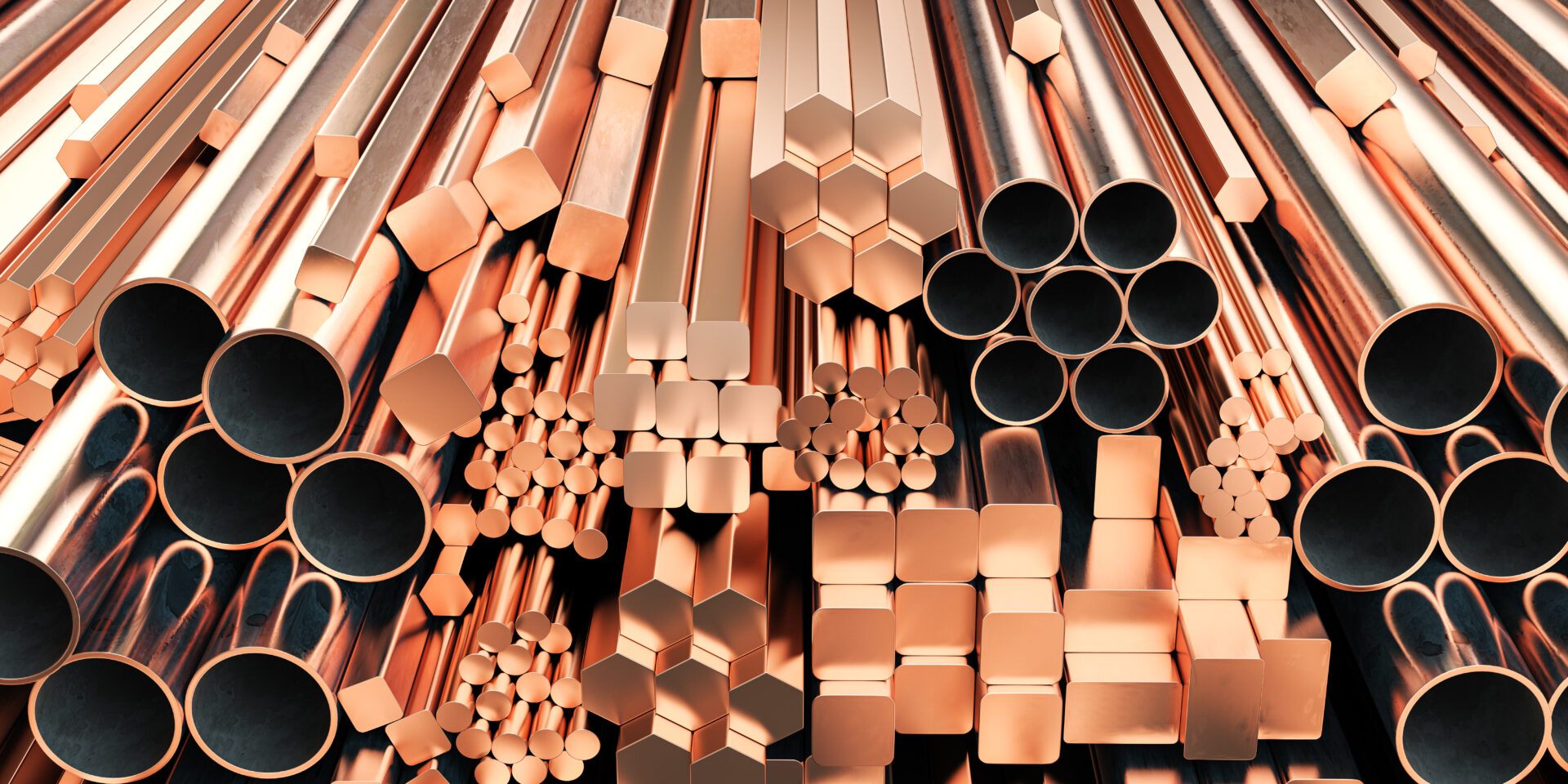
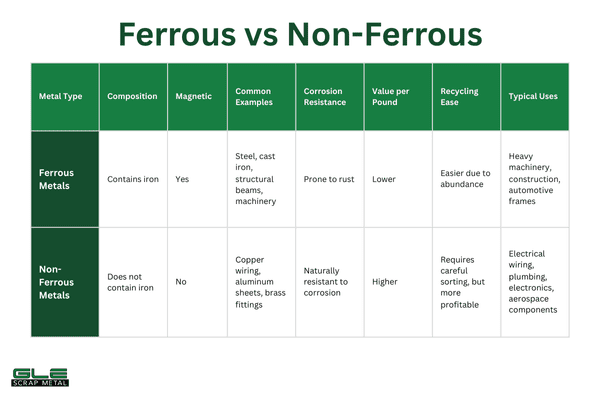
Non-ferrous metals, copper, aluminum, brass, and stainless steel consistently carry more value per pound than ferrous metals like steel, iron, and cast iron. The reason is straightforward: non-ferrous metals are more resistant to corrosion, lighter, and in higher demand across industries like construction, electronics, and automotive manufacturing.
That doesn’t mean ferrous scrap is worthless. Steel and iron still have strong market demand, especially in large volumes. But pound for pound, non-ferrous materials are where the value concentrates.
A quick way to tell the difference between ferrous vs non-ferrous: grab a magnet. If it sticks, the metal is ferrous. If it doesn’t, you’re likely holding non-ferrous material, and it’s probably worth more.
Current Commodity Market Prices
Scrap metal doesn’t exist in a vacuum. It’s a commodity, and its value tracks global markets.
Exchanges like the London Metal Exchange (LME) and COMEX set baseline prices for copper, aluminum, nickel, steel, and other metals. Those benchmarks shift daily based on international trade activity, production output, and economic conditions.
What this means for you: the price you receive for the same load of copper today could be different next week. Your scrap yard doesn’t set those baseline numbers; the global market does. Yards price off commodity benchmarks, adjusted for processing costs and local market conditions.
Trade policy also plays a direct role. Tariffs on steel and aluminum imports, like those implemented in 2025, shift domestic demand for scrap metal as mills adjust sourcing. When import costs rise, domestic scrap becomes more competitive, often pushing prices up. When tariffs ease, or exemptions expand, the opposite can occur. Staying aware of these policy shifts is part of understanding how your material’s value moves.
Staying aware of commodity trends helps you time larger loads more strategically.
Metal Purity and Contamination
Cleaner material gets better pricing. That’s a rule across the entire scrap industry.
“Contaminated” scrap doesn’t mean dirty in the traditional sense. In scrap metal terms, contamination refers to mixed metals — copper wire still attached to steel brackets, aluminum with bolts and fasteners still connected, or loads where multiple metal types are thrown together unsorted.
The more processing a buyer needs to do to separate and prepare your material, the lower the value of that load. Clean, properly sorted scrap requires less labor and less time on the processing floor, and that efficiency gets passed back to you in better pricing.

Quantity and Volume
Volume matters. A one-time drop-off of a few pounds of aluminum is a different conversation than a contractor delivering regular truckloads of mixed non-ferrous material every month.
Larger, consistent volumes create operational efficiency for the buyer, and that efficiency has a direct impact on the price you receive. Pickups can be scheduled, processing can be planned, and the material flow becomes predictable. That predictability has value, and it often translates into more competitive pricing for the seller.
If your business generates scrap on an ongoing basis, manufacturing offcuts, demolition debris, HVAC equipment, and electrical components, building a relationship with an established scrap buyer is one of the most effective ways to maximize long-term returns.
Supply and Demand Dynamics
The same economic principles that drive every market also drive scrap metal prices.
When demand for raw copper or aluminum spikes, driven by infrastructure spending, construction activity, or manufacturing growth, prices rise. When supply floods the market faster than buyers can absorb it, prices soften.
Seasonal patterns play a role, too. Construction activity ramps up in spring and summer across much of the U.S., which increases demand for structural metals. Winter slowdowns can temporarily suppress pricing. Large-scale policy decisions, trade agreements, tariffs, and infrastructure bills can shift the entire pricing landscape in a matter of weeks.
None of this is within your control. But understanding these cycles helps you make smarter decisions about when to hold material and when to move it.
Metal Condition and Preparation
Beyond contamination, the physical condition of your scrap affects its value.
Corroded, painted, or coated metals require additional processing before they can be resold or reintroduced into manufacturing supply chains. That extra processing time and cost reduce the value of the load.
On the other hand, material that arrives sorted by type, with non-metal attachments removed, screws, fasteners, brackets, fixtures, commands stronger pricing. This is one factor you can directly control. A few minutes of preparation before you load up can meaningfully impact the value you receive.
Don’t strip insulation from wire, bring it as-is, and let your scrap buyer handle the processing.
The takeaway is simple: the closer your material is to being a clean, single-type load, the more it’s worth.
Location and Logistics
Where you are relative to the buyer’s facility matters more than most sellers realize.
Transportation is a real cost in the scrap metal supply chain. For large commercial pickups, the distance between your site and the processing facility directly factors into pricing. The farther the haul, the more it costs to move the material, and that cost gets reflected somewhere.
This is one reason working with a scrap recycler that operates multiple facilities across your region makes a difference. Shorter distances mean lower logistics costs, faster turnaround, and ultimately better economics for both sides.
GLE Scrap Metal operates processing facilities across Florida and Michigan, as well as facilities in Kansas City, Missouri, and Pittsburgh, Pennsylvania, giving businesses in those regions a logistics advantage that translates into competitive pricing and reliable pickup scheduling.
How to Get the Best Value for Your Scrap Metal

You can’t control commodity markets or global supply chains. But you can control how you prepare and deliver your material. Here’s what moves the needle:
1. Sort your metals by type. Separate ferrous from non-ferrous. Within non-ferrous, separate copper from aluminum from brass. Sorted loads are worth more.
2. Remove non-metal attachments. Remove screws, bolts, fasteners, and fixtures. The cleaner the metal, the less processing required and the better your pricing.
3. Bring consistent volume. If your business generates regular scrap, establish a relationship with your buyer. Recurring volume often leads to more favorable pricing.
4. Stay aware of market conditions. You don’t need to watch commodity tickers daily, but a general understanding of whether markets are up or down helps you time larger deliveries.
5. Work with an established, reputable buyer. A scrap recycler with scale, multiple facilities, and deep market relationships will consistently offer more competitive pricing than a single-location operation with limited downstream outlets.
GLE Scrap Metal operates facilities in Florida and Michigan, as well as facilities in Kansas City, Missouri, and Pittsburgh, Pennsylvania, with dedicated logistics support and market-based pricing updated in real time. If you’re moving recurring commercial volume, contact our team to discuss pricing and pickup scheduling.
Frequently Asked Questions
What determines scrap metal prices?
Scrap metal prices are shaped by a combination of global commodity market conditions, the type of metal being sold, its purity and preparation, regional supply and demand, and the volume of the transaction. Non-ferrous metals like copper and aluminum typically command higher prices than ferrous metals like steel and iron.
Is non-ferrous scrap worth more than ferrous?
In most cases, yes. Non-ferrous metals, including copper, aluminum, brass, and stainless steel, carry a higher value per pound than ferrous metals. This is driven by their material properties, resistance to corrosion, and consistent demand across manufacturing sectors.
How can I get a better price for my scrap metal?
Sort your metals by type, remove non-metal attachments, and deliver larger volumes when possible. Working with an established scrap metal recycler that offers market-based pricing ensures you’re getting competitive rates tied to current commodity values.
Do scrap metal prices change daily?
Yes. Scrap metal pricing is directly tied to commodity exchanges that fluctuate based on global supply, demand, trade activity, and economic conditions. The price you receive today for the same material may differ from what you’d receive next week.
Get a Quote on Your Scrap Metal
Whether you’re clearing a job site, upgrading equipment, or managing an ongoing scrap stream, knowing what your material is worth starts with the right recycling partner.
Contact GLE Scrap Metal for a quote, or bring your materials directly to one of our facilities in Florida, Michigan, Missouri, or Pennsylvania. We buy, process, and sell all types of ferrous and non-ferrous scrap metal, and we’ll ensure you receive competitive, market-based pricing on every load.
Want to learn more about recycling your business’s scrap metal? Read our comprehensive guide, Industrial and Commercial Metal Recycling: What Businesses Need to Know.