Metal recycling doesn’t start at the smelter; it starts where scrap is created. Every manufacturer, contractor, or facility generating metal waste faces the same challenge: how to move scrap efficiently, safely, and profitably.
The proof is clear: optimized scrap metal transportation reduces costs, increases recovery rates, and supports sustainability goals.
In this guide, you’ll see exactly how scrap moves from source to smelter, who benefits most from scrap pick-up services, and how the right logistics partner transforms recycling into a strategic advantage.
Let’s break it down.
Why Metal Recycling Logistics Matter
Metal recycling is only as effective as the logistics that support it. Transportation connects scrap generators, processing facilities, recycling yards, and mills, forming the critical backbone of the entire recycling ecosystem.
Without efficient scrap metal transportation, materials sit idle, costs rise, and sustainability initiatives stall. Proper logistics turn what could be a bottleneck into a streamlined, value-generating process.
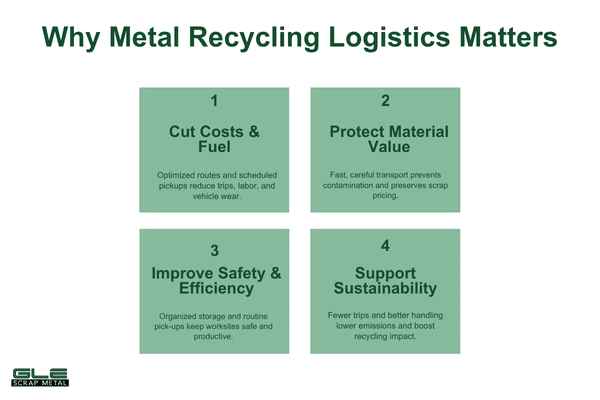
1. Reducing Costs and Fuel Consumption
Smart logistics reduces hauling expenses by optimizing routes, consolidating loads, and scheduling pickups efficiently. Fewer unnecessary trips save fuel, reduce labor costs, and minimize wear on vehicles.
By controlling these variables, businesses can transform scrap metal transportation from a reactive expense into a predictable, manageable cost center.
Every mile saved and every load consolidated directly improves operational margins.
2. Protecting Material Value
Efficient scrap pick-up ensures materials move quickly from generator to processor or mill. The faster scrap reaches its destination, the less likely it is to degrade or become contaminated.
Proper handling during transit also prevents material loss, protecting the value of both ferrous and non-ferrous metals. This helps businesses capture maximum pricing while maintaining high recovery rates.
3. Enhancing Safety and On-Site Efficiency
Scheduled scrap pickups reduce clutter on worksites and prevent unsafe conditions caused by overflowing containers or scattered materials.
Clear handling procedures and organized scrap storage also improve worker safety and reduce downtime from accidents.
Efficient logistics free up operational space, allowing employees to focus on core activities rather than managing scrap accumulation. This combination of safety and efficiency drives smoother, more productive operations.
4. Supporting Sustainability Goals
Reduced vehicle emissions, fewer trips, and better resource management contribute directly to sustainability targets.
Efficient scrap metal transportation aligns with environmental goals, enhances brand reputation, and demonstrates a company’s commitment to responsible recycling practices.
Think sustainability doesn’t impact your bottom line? think again. 74% of consumers say environmental concerns influence their purchasing decisions.
Businesses That Can Benefit From Scrap Pickup Services
If your business generates metal waste, logistics matter more than you think. Let’s look at who gains the most from professional scrap pick-up.

1. Manufacturing and Fabrication Shops
Manufacturers produce consistent, high-volume scrap streams. Think steel offcuts, aluminum shavings, and excess sheet metal.
Without scheduled scrap metal transportation, material piles up fast. That leads to workflow disruptions and safety hazards.
Routine scrap pick-up keeps production lines moving. It also maximizes recovery value by preventing mixing and contamination.
2. Construction and Demolition Contractors
This is where logistics get complex. Demolition sites generate massive volumes of mixed metal scrap, including:
- Structural steel
- Copper wiring
- Rebar
- Aluminum frames
- Cast iron piping
Off-site processing saves your company time but demands reliable transportation. That’s where the right equipment and logistics partner matter.
Plus, with tight project timelines and strict safety requirements, professional scrap metal transportation becomes non-negotiable.
3. Automotive and Equipment Repair Facilities
Automotive and equipment repair shops generate a steady stream of valuable non-ferrous metals, including aluminum panels, copper wiring, and radiator as well as ferrous metals like steel components.
Without regular scrap pick-up, bays can become cluttered, creating safety hazards and compliance concerns. Scheduled scrap metal transportation keeps workspaces organized and safe while ensuring materials move efficiently.
It also helps shops maintain consistent cash flow by selling scrap at optimal market prices instead of letting it sit idle and lose value.
4. Warehouses and Distribution Centers
Warehouses and distribution centers often produce scrap from metal racking and equipment. Volumes can vary significantly depending on inventory cycles, seasonal demand, or operational changes.
Flexible scrap pick-up solutions allow facilities to adapt quickly to these fluctuations. Regular pickups prevent congestion, reduce downtime, and make operations more efficient.
By streamlining scrap handling, warehouses can turn what might otherwise be a storage burden into a source of revenue.
5. Municipalities and Public Works Departments
Municipalities and public works departments generate scrap from infrastructure projects, utility maintenance, and city operations.
Handling this scrap safely and in compliance with regulations is critical. Reliable scrap pick-up ensures materials are collected and transported efficiently while supporting sustainability initiatives.
Consistent service also improves transparency, accountability, and reporting for public agencies, making metal recycling a reliable and environmentally responsible part of city operations.
How Metal Recycling Transportation Works: From Collection to Delivery
Ever wonder how scrap actually moves from the point of generation to a smelter? Understanding the journey helps businesses optimize operations, improve recovery, and protect material value.
Let’s walk through the process step by step.

1. On-Site Scrap Generation and Accumulation
Scrap is created wherever metal is cut, replaced, or removed, whether on a factory floor, construction site, or repair facility. How it’s collected and stored at this stage sets the tone for the entire logistics chain.
Designated bins or roll-off containers prevent cross-contamination between ferrous and non-ferrous metals. Clear labeling makes it easy for handlers to identify material types, speeds up loading, and reduces errors during transport.
Proper accumulation also improves safety by keeping work areas organized and minimizing tripping hazards. Without it, even the most efficient scrap metal transportation plan can run into delays or rejected loads.
2. Pick-up Scheduling and Routing
Once scrap is ready, scheduling a pickup is the next critical step. Efficient routing minimizes fuel use, reduces vehicle wear, and prevents unnecessary delays.
Scheduled scrap pick-up prevents overflow at worksites and ensures that containers are available when needed. Advanced logistics planning allows trucks to arrive precisely when loads are ready, keeping both generators and haulers productive.
By coordinating pickups strategically, businesses maintain smooth operations and avoid costly emergency hauls.
3. Transfer Stations, Processors, and Recycling Yards
Scrap often makes stops at transfer stations or processing facilities before reaching the final smelter. Here, materials are sorted, cleaned, and prepared for resale or melting.
Transportation between these facilities must be handled with care. Improper handling or mixed loads can reduce material quality and lead to rejected shipments, which erode both profit and efficiency.
Experienced scrap metal transportation providers ensure that transfers are seamless, loads remain secure, and material integrity is maintained throughout the journey.
4. Delivery to Mills and Smelters
The final step is delivery to a mill or smelter, where scrap is melted down and turned into raw material. Mills require consistent, clean, and correctly sorted scrap to maintain production schedules and pricing agreements.
Timely scrap metal transportation ensures materials arrive on schedule, protecting both the value of the scrap and the operational needs of the smelter.
When logistics are executed smoothly, the entire recycling chain benefits, from generator to end-user, turning scrap into valuable, reusable resources efficiently and reliably.
Types of Metal That Can Be Recycled
Not all metals move the same way through the recycling process. Handling, storage, and scrap metal transportation requirements vary based on material type, weight, and value.
Understanding these differences is essential for protecting safety, efficiency, and profitability.
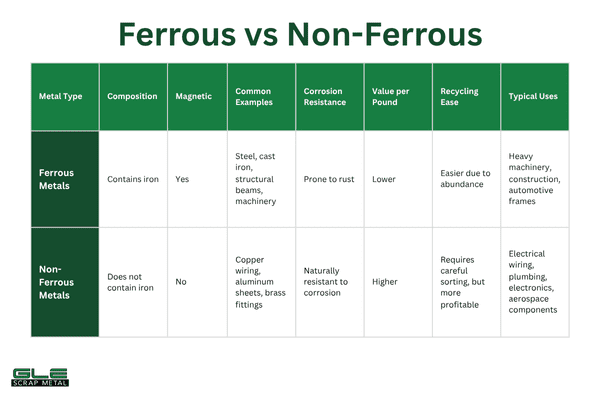
Ferrous Metals
Ferrous metals contain iron and make up a large portion of recycled scrap. Common examples include steel, cast iron, rebar, and structural scrap from manufacturing and demolition sites.
These materials are heavy and magnetic, which affects how they are collected and transported. Container selection, load limits, and lifting equipment must be carefully planned to prevent overloading and damage.
Because ferrous metals are often generated in high volumes, efficient scrap pick-up schedules are critical. Regular pickups help manage weight limits while keeping worksites safe and organized.
Non-Ferrous Metals
Non-ferrous metals do not contain iron and typically carry a higher market value. Aluminum, copper, brass, stainless steel, and specialty alloys fall into this category.
These materials are lighter than ferrous metals but require more careful handling. Even small amounts of contamination can significantly reduce pricing.
Proper segregation during scrap pick-up is essential. Separate containers and clear labeling protect material quality and maximize recovery value.
Why Metal Type Matters in Transportation Planning
Different metals require different handling methods, equipment, and routing considerations. Mixing ferrous and non-ferrous materials leads to contamination, rejected loads, and lost revenue.
Smart scrap metal transportation strategies account for metal type from day one. By planning around material characteristics, businesses improve safety, increase efficiency, and capture the highest possible value from every load.
Safety Tips for Handling and Transporting Scrap Metal
Safety isn’t optional when handling scrap metal. It’s essential for protecting workers, equipment, and the integrity of every load.
Strong safety practices reduce accidents, prevent compliance violations, and keep scrap metal transportation moving without costly disruptions.
1. Proper Loading and Weight Distribution
Overloaded containers increase the risk of accidents, equipment damage, and regulatory violations. Balanced loads ensure trucks remain stable and protect both drivers and surrounding traffic.
Even weight distribution also reduces strain on containers and lifting equipment. When loads are secured properly, materials stay in place during transit, minimizing road hazards and material loss.
2. Personal Protective Equipment (PPE)
Handlers and drivers must wear appropriate personal protective equipment at all times. Gloves, eye protection, high-visibility apparel, and steel-toe boots help prevent common injuries.
Consistent safety training reinforces proper handling techniques. Well-trained teams work more confidently and experience fewer injuries, reducing downtime and workers’ compensation risks.
3. Preventing Spills, Injuries, and Contamination
Scrap metal often includes sharp edges, loose debris, and irregular shapes. Without proper containment, these materials create serious safety and environmental risks.
Covered containers, secure strapping, and proper packaging prevent spills during scrap pick-up and transport. These measures also reduce contamination, which can lead to rejected loads and lost revenue. Every rejected load costs time and money.
Strong safety and handling practices protect both people and profit.
Partner with professionals for help. Experienced scrap metal transportation providers manage safety protocols and training, so your team can focus on operations while every load moves safely and efficiently.
Common Challenges in Metal Recycling Logistics (and How to Overcome Them)
Even the most efficient recycling programs face logistical challenges. The key is identifying these issues early and applying proven solutions that keep scrap metal transportation running smoothly.
Let’s tackle the biggest obstacles and learn how to overcome them.

1. Fluctuating Fuel and Freight Costs
Fuel and freight costs can change with little warning. These fluctuations make budgeting and forecasting difficult for scrap metal transportation operations.
Unplanned routes and inefficient scheduling amplify the impact. Every extra mile increases fuel spend and reduces margins.
Solution
Route optimization and long-term logistics partnerships stabilize costs. Strategic routing minimizes unnecessary travel.
Reliable partners help lock in consistent pricing and plan around market volatility.
2. Inconsistent Scrap Volumes
Scrap generation rarely stays the same. Production spikes, slowdowns, and project-based work all affect scrap output.
Rigid pickup schedules can’t adapt fast enough. That leads to overflow, missed pickups, or underutilized hauls.
Solution
Flexible scrap pick-up solves this problem. Scalable service models adjust to real-time volume changes without disrupting operations.
3. Contamination and Rejected Loads
Contamination is one of the most costly challenges in metal recycling. Mixed metals, debris, and non-metal materials reduce scrap value immediately.
Rejected loads waste time, fuel, and labor. They also delay payments and disrupt downstream processing.
Solution
Clear handling procedures prevent these issues. Trained handlers and proper container labeling protect material quality from pickup to delivery.
Strong planning turns challenges into manageable variables. Consistent processes, flexible scheduling, and trusted partnerships create resilience.
When logistics are proactive instead of reactive, scrap metal transportation becomes more predictable, efficient, and profitable.
Best Practices for Efficient Scrap Metal Transportation Logistics
Want better results? These proven best practices help streamline scrap pick-up, reduce costs, and improve overall performance across your recycling operation.

1. Standardize Scrap Handling Procedures
Standardized scrap handling procedures create consistency from the point of generation to pickup. Clear guidelines for sorting, container use, and labeling improve speed, safety, and material quality.
Consistency also simplifies employee training. When everyone follows the same process, errors decrease and productivity increases.
2. Reduce Downtime and Missed Pickups
Missed pickups disrupt operations and create safety hazards. Clear communication between generators and haulers prevents scheduling conflicts and unnecessary delays.
Shared pickup calendars and defined service windows keep all parties aligned. This ensures scrap metal transportation remains reliable, even during peak production periods.
3. Improve Generator–Hauler Communication
Strong communication is the backbone of efficient logistics. Real-time updates on volume changes, container status, and pickup readiness eliminate surprises.
When generators and haulers stay connected, routes can be adjusted proactively. That flexibility builds trust and drives long-term efficiency.
4. Prepare Scrap for Faster Processing
Properly prepared scrap moves through the recycling chain faster. Clean, sorted loads reduce processing time and minimize rejected shipments.
Better preparation also improves pricing outcomes. Higher-quality scrap delivers stronger recovery rates and better returns
Want help optimizing your logistics? Partner with professionals for help! Experienced providers bring proven systems, specialized equipment, and expert coordination to optimize every step of scrap metal transportation.
Benefits of Optimizing Your Scrap Metal Logistics
Optimizing your scrap metal logistics creates measurable improvements across cost control, efficiency, and sustainability.
When scrap pick-up and transportation are aligned with your operations, recycling becomes a strategic advantage rather than a reactive task.
1. Lower Transportation Costs
Efficient routing reduces unnecessary mileage, cuts fuel consumption, and decreases wear and tear on vehicles.
Consolidating loads and scheduling regular scrap pick-up reduces labor costs and prevents the need for expensive emergency hauls.
The result is a more predictable transportation budget and improved operational margins, allowing businesses to invest in growth rather than cover avoidable costs.
2. Faster Turnaround Times
Streamlined scrap metal transportation keeps materials moving steadily through the recycling chain. Quicker pickups and deliveries mean scrap reaches processors faster, accelerating processing and payment cycles.
This not only improves cash flow but also reduces the time materials sit idle on-site, freeing up space and keeping worksites organized.
3. Improved Sustainability
Optimized logistics reduce fuel use, vehicle emissions, and energy consumption throughout the supply chain. These efficiencies support environmentally-friendly initiatives and demonstrate a company’s commitment to environmental responsibility.
By minimizing the environmental footprint of scrap transportation, businesses strengthen their brand reputation while contributing to long-term sustainability goals.
4. Increased Scrap Value
Proper sorting, handling, and segregation of metals protect material quality from pickup to delivery. Clean, organized loads achieve higher pricing, increase recovery rates, and reduce the risk of rejected shipments at processing facilities.
Better-prepared scrap not only maximizes revenue but also improves efficiency for processors, creating a more reliable and profitable recycling cycle for everyone involved.
Unlocking Efficiency with Scrap Metal Transportation Logistics Solutions
Partnering with an experienced scrap metal logistics provider transforms how your business handles scrap.
The right partner doesn’t just pick up metal; they implement solutions that improve efficiency, reliability, and overall operational performance.
Here’s what you gain when you work with a professional provider.

1. Route Optimization and Load Consolidation
A logistics partner plans the most efficient routes for pickups and deliveries, reducing idle time, fuel use, and unnecessary mileage.
Load consolidation combines multiple pickups into fewer trips, lowering labor costs, minimizing equipment wear, and improving fleet utilization.
Together, these strategies streamline transportation, making operations more predictable and reliable.
2. Scalable Pickup Solutions
Scrap volumes fluctuate with production schedules, seasonal demand, and project-based work. A professional provider offers flexible pickup options that scale with your needs.
Whether you need frequent routine pickups or additional service during high-volume periods, scalable solutions ensure scrap is collected on time, every time, without disrupting your workflow.
3. Cost-Saving Strategies
Recurring pickups and planned logistics reduce reliance on emergency hauls, helping stabilize transportation costs. By turning scrap metal transportation into a structured, repeatable process, businesses can better manage expenses while improving operational efficiency.
With a reliable partner in place, scrap metal transportation becomes a streamlined, cost-effective component of your overall recycling program, delivering measurable value from start to finish.
So how do you pick the right transportation and logistics solution?
Choosing the Right Logistics Partner for Metal Recycling Operations
Your logistics partner can make or break your recycling program. The right provider doesn’t just haul scrap; they optimize your entire scrap metal transportation process.
So what separates a true partner from a basic hauler?

1. Industry Experience
Not all scrap is created equal. Different industries generate different materials, volumes, and challenges. While manufacturing scrap requires consistency and contamination control, construction and demolition scrap demands heavy-duty handling and tight scheduling.
An experienced partner understands these nuances. They know how to manage ferrous versus non-ferrous metals, hazardous components, and fluctuating volumes.
That expertise protects material value.
2. Equipment and Fleet Capabilities
Here’s where efficiency becomes visible. The right logistics partner invests in specialized equipment. Roll-off containers, flatbeds, and heavy-haul trucks aren’t optional; they’re essential.
Fleet size matters too. A limited fleet creates delays during peak demand, while a well-equipped provider scales with your operation. They ensure scrap metal transportation stays reliable as volumes grow or project timelines shift.
The result? Fewer missed pickups, faster turnaround, and smoother operations.
3. Transparency and Reporting
Logistics should never feel like a black box. Transparency builds confidence and long-term trust. Clear pricing eliminates surprise fees, and itemized reporting shows exactly what was picked up, when, and where it went
It also helps businesses track sustainability metrics and scrap recovery performance. When reporting is clean and consistent, decision-making improves.
4. Customer Service and Experience
Exceptional logistics isn’t just about trucks and schedules; it’s about people. Responsive customer service ensures:
- Questions are answered promptly
- Issues are resolved efficiently
- Your team feels supported every step of the way
A partner that prioritizes experience listens to your needs, adapts to changes in volume, and provides proactive updates about pickups, delays, or special handling requirements. This level of service reduces stress, builds trust, and strengthens long-term relationships.
5. A True End-to-End Partner
A strong logistics partner does more than show up with a truck. They plan, coordinate, and continuously improve your scrap pick-up strategy.
From container placement to route optimization, every detail matters. That end-to-end support transforms scrap metal transportation into a competitive advantage.
In the end, the right partner simplifies recycling, so your team can stay focused on running the business.
Build a Smarter Scrap Metal Supply Chain
Metal recycling logistics isn’t just about moving material. It’s about building a smarter, safer, more profitable operation.
Are your scrap pick-up processes working as hard as your business does? Or are inefficiencies costing you time, money, and value?
Partner with GLE Scrap Metal, a trusted metal recycling logistics provider that understands scrap metal transportation from source to smelter. With the right systems, equipment, and expertise, your company can turn scrap into a strategic asset, supporting sustainability goals while maximizing returns.
That’s the power of doing logistics right.