Running a business today means more than just profits; it’s about responsibility. You want to make an impact while improving your bottom line.
Industrial metal recycling isn’t just buzzwords; it’s a powerful tool that drives sustainability and efficiency.
Businesses across industries are seeing proof: companies that embrace recycling programs save money, reduce waste, and enhance their reputation.
In this guide, we’ll walk you through everything you need to know to implement an effective recycling program and turn your scrap into opportunity.
More Businesses Are Going Green
The push for sustainability isn’t slowing down. Businesses of all sizes are adopting green practices, and metal recycling is at the forefront.
With pressures from both consumers and the government, more and more businesses are transforming their processes to be greener.
Industrial metal recycling allows companies to reuse raw materials, reducing the need for mining and manufacturing new metals. It also ensures that offices, warehouses, and retail spaces can contribute to the circular economy.
Think of it as a win-win: you reduce costs while demonstrating environmental responsibility.
Advantages of Recycling for Businesses
Recycling isn’t just good for the planet; it’s a smart business strategy. Companies across every sector are realizing that industrial and commercial metal recycling delivers measurable benefits, from cost savings to reputation boosts.
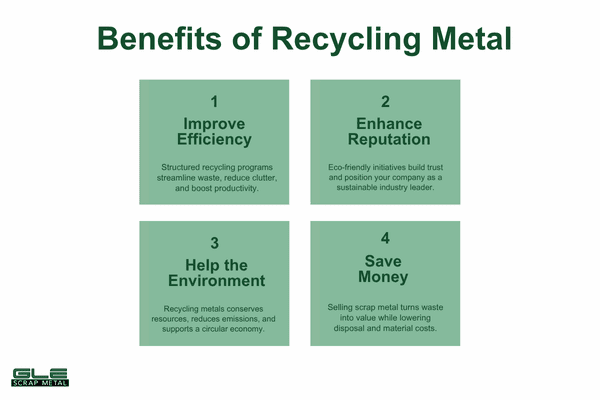
Let’s break down how your business can benefit.
1. Improve Business Efficiency
Every piece of unused metal sitting on your shop floor is wasted potential. A structured recycling program brings organization, clarity, and control to your operations.
When you implement a commercial scrap metal recycling system, you:
- Streamline waste management
- Reduce on-site clutter that slows production
- Create a cleaner, safer work environment
With clear collection points and scheduled pickups, employees spend less time managing waste and more time focusing on productivity. Efficiency improves across the board, and your bottom line follows suit.
2. Enhance Reputation
Today’s customers care about sustainability. In fact, more than 62% of consumers say they’re more likely to support environmentally responsible companies.
When your business commits to industrial metal recycling, you’re not just recycling materials; you’re building trust.
By promoting your eco-friendly initiatives, you show clients, partners, and stakeholders that your brand is forward-thinking and socially responsible. This builds credibility and positions your company as a leader in sustainable innovation.
Recycling strengthens your brand image and sets you apart from competitors who aren’t doing their part.
3. Help the Environment
Every ton of recycled metal saves countless natural resources. For example, recycling aluminum uses 95% less energy than producing it from raw ore.
By diverting metals from landfills and reintroducing them into the supply chain, your company directly:
- Reduces greenhouse gas emissions
- Conserves natural resources like iron ore and bauxite
- Supports the circular economy, keeping valuable materials in use
Commercial metal recycling doesn’t just make sense environmentally; it’s a tangible way your business can prove its commitment to sustainability. And that’s something both your employees and customers can take pride in.
4. Save Money and Open New Revenue Streams
Here’s where it really gets exciting, industrial and commercial metal recycling can pay you back.
Scrap metal isn’t waste; it’s a valuable asset.
By collecting and selling your metal waste, you transform what used to be a cost center into a profitable revenue stream. Businesses that consistently recycle their industrial scrap metals enjoy:
- Lower disposal and landfill fees
- Revenue from reselling high-value metals
- Reduced need for purchasing new materials
Over time, these savings add up and can even fund other sustainability initiatives within your organization. Recycling industrial and commercial scrap metal keeps your operations lean, green, and profitable.
Implementing a recycling program isn’t just an environmental choice; it’s a strategic business decision. From improving operational efficiency to generating revenue, commercial and industrial metal recycling positions your business for long-term success in a competitive market.
Steps to Recycle Industrial Scrap Metal
Getting started with industrial and commercial metal recycling may seem complex at first, but with the right process, it becomes seamless and profitable.
Whether your business produces scrap from manufacturing, construction, or equipment maintenance, following a structured recycling system helps you maximize value and minimize waste.
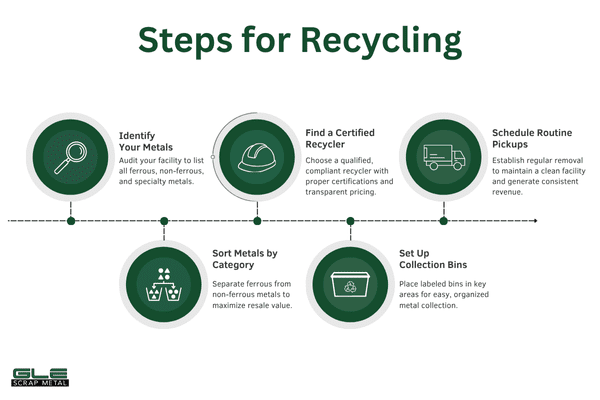
Let’s walk through each step of recycling your business’s metal.
1. Identify What Industrial Metals You Have at Your Business
The first step in any recycling program is knowing your materials. Different metals carry different values and recycling processes, so begin with a thorough audit of your facility.
Walk through your production floor, warehouse, or storage areas and list every source of metal waste. Common examples include:
- Ferrous metals like iron and steel, often found in machinery, beams, and structural components.
- Non-ferrous metals such as copper, aluminum, brass, and stainless steel, typically found in wiring, pipes, and electronic parts.
- Specialty alloys are used in aerospace, automotive, and precision manufacturing applications.
Knowing exactly what metals you generate sets the foundation for a smooth recycling process and ensures you don’t leave money on the table.
2. Sort Metals by Category
Once you’ve identified your scrap, the next step is sorting. And here’s why it matters: recyclers pay more for well-sorted materials. Start by separating metals into two main categories, ferrous and non-ferrous.
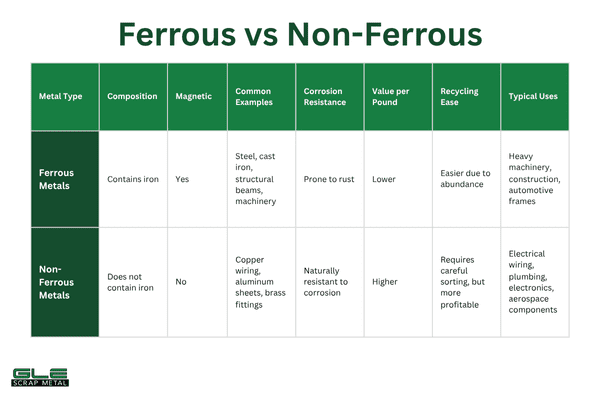
Ferrous Metals
These contain iron, making them magnetic and commonly used in heavy machinery and construction. While less valuable per pound, they’re typically easier to recycle due to their abundance.
Non-Ferrous Metals
These are more valuable because they don’t contain iron and resist corrosion. Think copper wiring, aluminum sheets, and brass fittings; small quantities of non-ferrous metals can deliver a significant return.
Pro tip: Use a simple magnet test. If it sticks, it’s ferrous; if it doesn’t, it’s non-ferrous.
Sorting your metals cleanly not only increases the resale value but also reduces processing time for your recycler.
3. Find a Qualified and Certified Industrial Scrap Metal Recycler
Here’s where the process becomes crucial. Not all recyclers are created equal.
Partnering with a qualified, certified, and compliant industrial scrap metal recycler ensures your materials are handled responsibly and that your business remains compliant with local and federal regulations.
When choosing a recycling partner, look for:
- Proper environmental and safety certifications
- Transparent pricing and documentation
- Convenient pickup schedules and on-site container options
- Experience with industrial metal recycling for your specific industry
The right recycling partner helps you manage logistics, provides proof of recycling for compliance reports, and helps you maximize the return on your scrap.
4. Get Cans and Bins
Once your recycler is on board, it’s time to set up your collection system. Work with your recycling partner to place labeled bins or containers around key production areas.
For instance:
- Near machinery that generates metal shavings or turnings
- In shipping and receiving zones where packaging metals accumulate
- Inside maintenance shops for discarded tools, wiring, and metal parts
Make sure bins are clearly labeled for ferrous and non-ferrous materials. Simple signage can dramatically reduce contamination and increase participation among your employees.
Remember, an organized setup = a more profitable program.
5. Schedule Routine Removal and Pick-Up
Consistency is key. Regular pickups keep your facility clean, safe, and efficient while preventing clutter from accumulating.
A reliable commercial scrap metal recycling partner will establish a pickup schedule that matches your production volume, whether weekly, biweekly, or monthly.
By keeping recycling on a regular schedule, your business:
- Maintains compliance with safety standards
- Keeps operations smooth and uncluttered
- Generates consistent income from scrap sales
Routine removal also ensures you don’t miss out on market fluctuations. Metal prices can rise unexpectedly, and frequent pickups let you capitalize on those higher rates.
Recycling industrial and commercial scrap metal doesn’t have to be complicated. With the right process, you can turn waste into wealth while improving your environmental impact.
Once your recycling program is established, it’s time to optimize it for even greater efficiency.
How to Optimize a Recycling Program
A program isn’t effective unless it’s monitored and improved over time.
1. Understand the Flow of Scrap
Perform an audit to identify where metals are generated, track volumes, and analyze waste patterns. This sets the foundation for an efficient system.
2. Educate Your Team
Train employees to recognize recyclable metals and use bins correctly. Knowledgeable staff are your strongest allies.
3. Track Performance and Set KPIs
Measure success with clear metrics: pounds recycled, revenue generated, and cost savings. Benchmark performance to continuously improve results.
Industries & Recycled Scrap Metal
Many industries not only generate scrap metal but also depend on recycled metals to operate efficiently and sustainably. Scrap metal serves as a critical resource, providing materials for ongoing production while supporting cost savings, waste reduction, and environmental responsibility.

Automotive Manufacturing
Vehicle production generates large volumes of metal waste, including frames, engine components, and scrap sheet metal. Implementing industrial metal recycling allows auto manufacturers to recover valuable materials while reducing disposal costs.
IT & Data Centers
Servers, wiring, circuit boards, and other electronics contain valuable metals like copper, aluminum, and even gold. Efficient commercial scrap metal recycling programs allow tech companies to reclaim these materials safely and responsibly.
Manufacturing Plants
Every corner of a manufacturing plant can yield recyclable materials, from metal turnings to packaging. Even small items, like metal turnings, can quickly add up and generate additional revenue while significantly reducing waste.
Tips to grow your green manufacturing facility:
- Commit to Recycling – Know why and when to start
- Plan – Set goals and track materials
- Inform Staff – Communicate changes and motivate participation
- Simplify – Place and label bins clearly
- Recycle Properly – Use a trusted service like GLE Scrap Metal
Implementing a comprehensive recycling program benefits manufacturers by enhancing their reputation, lowering costs, and promoting sustainable operations.
Construction & Demolition (C&D)
Recycling scrap metal from construction and demolition projects delivers significant financial and environmental benefits. Not only does it reduce landfill waste, but it also turns what would be discarded into a valuable resource for your business.
From tearing down commercial buildings to residential homes, nearly every project produces recyclable materials. Items like doors, wiring, plumbing fixtures, steel beams, and structural metal components can all be recovered and reused.
By recycling these materials, each piece of metal can re-enter production, conserving energy, reducing the need for new raw materials, and supporting a circular economy. Efficient construction and demolition recycling programs help businesses save money, demonstrate sustainability, and contribute to long-term environmental responsibility.
Ships
The shipping industry relies heavily on metals like steel and aluminum. Ships generate scrap metal during:
- Routine maintenance and repairs
- Decommissioning of old vessels
- Upgrades to components and machinery
Through industrial metal recycling, shipping companies can recover these metals, reducing raw material costs and contributing to more sustainable operations. Even small amounts of recovered metal can add up, creating both financial and environmental value.
Aerospace
Aerospace manufacturers and airlines work with high-grade metals such as aluminum and titanium alloys. Aircraft generate recyclable scrap during:
- Manufacturing of new planes
- Component replacement and maintenance
- Decommissioning of retired aircraft
Commercial metal recycling in aerospace ensures these metals are reused safely and efficiently. By recovering valuable materials, aerospace companies reduce production costs, conserve resources, and strengthen their sustainability credentials.
Use Cases: Recycling Programs Started by Top Businesses
Leading companies are proving that industrial and commercial metal recycling isn’t just sustainable, it’s profitable and scalable.
These case studies highlight the financial and environmental advantages of structured programs.
Hewlett-Packard (HP)
HP’s Planet Partners Program allows customers to return used hardware for certified recycling. The company uses up to 90% recycled aluminum and 50% recycled copper in its products and continues to expand its use of recycled steel and magnesium. These efforts reduce raw material demand and support a circular supply chain across its global manufacturing operations.
Apple
Apple has made bold moves toward metal circularity. By 2025, all Apple-designed batteries will use 100% recycled cobalt, and circuit boards will include recycled copper, tin, and gold. Apple’s environmental progress reports also show that more than 80% of its rare earth elements now come from recycled sources, proof that large-scale, high-tech manufacturing can successfully rely on reclaimed metals.
Coca-Cola
Coca-Cola’s recycling programs highlight the power of commercial metal recovery. The company uses up to 40% recycled materials in its cans and supports new recycling facilities, aiming to collect 70% to 75% of the equivalent number of cans over the next decade. These initiatives show how even beverage brands can turn everyday materials into valuable recycled assets.
Factors Affecting the Value of Your Scrap Metal
Not all scrap metal is created equal. Whether you’re recycling for profit or sustainability, understanding what determines your scrap’s value can help your business maximize every load.

Let’s break down the key factors that influence scrap metal pricing and how you can get the best return.
1. Metal Type and Grade
Here’s the first, and most important, factor: what kind of metal you’re recycling. Different metals carry vastly different market values. For instance:
- Copper and brass are among the most valuable non-ferrous metals
- Aluminum offers solid returns due to its light weight and recyclability
- Steel and iron, while less valuable per pound, are produced in high volumes and are easy to recycle
Each metal also comes in different grades, which determine purity and usability. For example, “bare bright” copper (pure, uncoated copper wire) is worth more than insulated wiring.
2. Cleanliness and Contamination
Recyclers value clean metal, and they’ll pay more for it. Contaminants such as dirt, oil, plastic, paint, or other metals make the recycling process more expensive and time-consuming.
The cleaner your scrap, the less work required to process it, and the higher your payment.
If you handle industrial metal recycling, make sure your staff removes non-metal attachments, such as rubber seals, bolts, or plastic coatings, before sending it off.
3. Volume and Quantity
In the world of commercial scrap metal, size matters. Larger quantities often command better rates because recyclers can process them more efficiently.
Bulk shipments also reduce transportation costs and give your business more negotiating power.
If your company generates regular scrap, consider scheduling routine pickups to accumulate consistent volumes. Many recyclers even offer preferred pricing or loyalty programs for high-volume clients.
4. Market Conditions and Commodity Prices
Here’s where timing comes into play. Scrap metal prices fluctuate daily based on global commodity markets, supply and demand, and economic conditions.
For example:
- When manufacturing demand rises, so do metal prices.
- When supply exceeds demand, values may dip temporarily.
To stay ahead, monitor industry news or ask your recycler for pricing updates. Partnering with a certified industrial metal recycling center that has a hedging program allows you to lock in at a certain market value.
5. Sorting and Preparation
Sorting may seem simple, but it’s one of the biggest value drivers in recycling. When metals are properly sorted, ferrous metals are separated from non-ferrous metals, copper is isolated from brass, and recyclers can process them more efficiently.
That means less contamination, less labor, and higher payouts for you. Businesses that go the extra mile to prepare their scrap, cutting large pieces, or baling smaller items, typically see significantly better returns.
Remember, preparation pays off.
6. Transportation & Logistics
How your scrap gets to the recycler also affects value. If you deliver your metals directly to a recycling center, you avoid transportation fees and retain full profit.
On the other hand, if your recycler handles pickup, your rate may include logistics costs.
Efficient handling, like compacting or bundling scrap before transport, can help reduce these expenses. Some commercial metal recycling companies even provide on-site containers and free pickups for regular clients, saving you both time and money.
7. Relationship with the Recycler
This is the most overlooked, but powerful, factor. Establishing a long-term relationship with your recycling partner can lead to better pricing, faster service, and exclusive perks.
Recyclers value consistent suppliers and often offer volume-based bonuses or priority scheduling. A trusted partnership also ensures transparency.
You’ll receive accurate weights, fair market pricing, and reliable reporting for your sustainability goals. At the end of the day, loyalty equals leverage, and your business benefits from both.
Rules and Regulations Your Business Should Be Aware Of
Proper recycling practices protect your business, your employees, and the environment. Noncompliance results can outweigh any short-term cost savings from cutting corners.
Failing to meet recycling regulations can lead to significant penalties, including fines that can reach thousands per violation, suspension of business licenses, or even civil liability. Beyond the financial hit, noncompliance can severely damage your company’s reputation and credibility.
1. Proper Storage and Handling
Businesses must store scrap metal safely to prevent leaks, contamination, or accidents. Metals should be kept in designated bins or containers, separated by type, and away from storm drains or soil.
Improper storage can lead to environmental violations under the EPA’s Resource Conservation and Recovery Act (RCRA).
2. Documentation and Recordkeeping
Detailed records of scrap metal pickups, sales, and recycling must be maintained. Most states require manifests or bills of lading to document the transfer of recyclable materials.
These records verify that metals were handled responsibly and delivered to licensed recycling facilities.
3. Local, State, and Federal Compliance
Regulations can vary depending on your location and industry. For example:
- The EPA oversees national environmental compliance and hazardous material handling.
- State Departments of Environmental Protection (DEP) regulate permits for industrial metal recycling facilities.
- Local municipalities often set recycling mandates, such as reporting requirements or approved disposal partners.
Here are some state laws to be aware of when you recycle.
Florida Scrap Yard Laws
- Driver’s License – scrap yards keep a copy on file
- Signature – must sign a statement of ownership
- Fingerprint – all sellers are fingerprinted
- Records – maintain purchase records
Michigan Scrap Yard Laws
- Driver’s License – present ID for copy on file
- License Plate – scrap yards record plate number
- Signature – confirm you are authorized to sell metals
- Fingerprint – all sellers must be fingerprinted
- Photo – scrap yards take a picture of sellers
- Tag & Hold – 7-day hold policy for most non-ferrous metals
How to Choose the Right Metal Recycling Center
Selecting the right industrial or commercial metal recycling partner is critical for maximizing revenue, ensuring compliance, and supporting sustainability goals.
Not all recyclers are created equal, so it’s important to evaluate potential partners carefully.
Choosing the right metal recycling center isn’t just about price; it’s about reliability, compliance, and maximizing the value of your scrap metals. A trusted partner ensures your industrial and commercial metal recycling program runs efficiently, legally, and profitably.

1. Verify Certifications and Compliance
Look for recyclers with recognized certifications such as R2 (Responsible Recycling), ISO, or ISRI. These credentials ensure that the recycler follows industry best practices for environmental responsibility, worker safety, and proper handling of scrap metals.
2. Assess Experience and Industry Knowledge
A recycler familiar with your type of metal and industry can optimize processing and provide higher returns.
For example, automotive plants may require expertise with aluminum and steel components, while manufacturing facilities may need experience with mixed metal scrap from machinery and equipment.
3. Evaluate Services Offered
Some recycling centers offer additional services that can save your business time and money, such as:
- On-site pickup and container service
- Sorting and preparation assistance
- Detailed reporting and tracking of recycled materials
4. Consider Pricing and Transparency
A reputable recycler provides clear pricing, transparent weight measurements, and fair market rates for commercial scrap metal. Avoid partners who offer vague estimates or unclear payment terms.
5. Check References and Reputation
Ask for client references or case studies demonstrating successful partnerships. Positive feedback from other businesses in your industry indicates reliability and quality service.
6. Sustainability Commitment
Beyond profits, a strong recycling partner should prioritize environmental impact. Ask how they manage metals after collection, whether materials are reprocessed responsibly, reused in new products, or disposed of safely.
FAQs
1. What metals are most valuable?
Copper, aluminum, brass, and stainless steel typically yield the highest returns.
2. Can I recycle mixed materials?
Yes, but separating metals by type ensures maximum value.
3. How often should I schedule pickups?
Frequency depends on your volume of scrap, but regular intervals prevent buildup and maintain efficiency
Recycle With a Certified Recycler Today
Your business can turn metal waste into measurable value. Partnering with certified industrial and commercial metal recycling experts ensures safety, compliance, and profitability.
You’ve learned the steps, benefits, and strategies to implement a world-class industrial metal recycling program. Are you ready to transform your scrap into opportunity and strengthen your business’s sustainability profile?
Contact our certified industrial and commercial metal recycling team today to start your program, maximize your revenue, and make a measurable environmental impact.